

Aftercare & Maintenance

5 MOST COMMON AFTERCARE MISTAKES
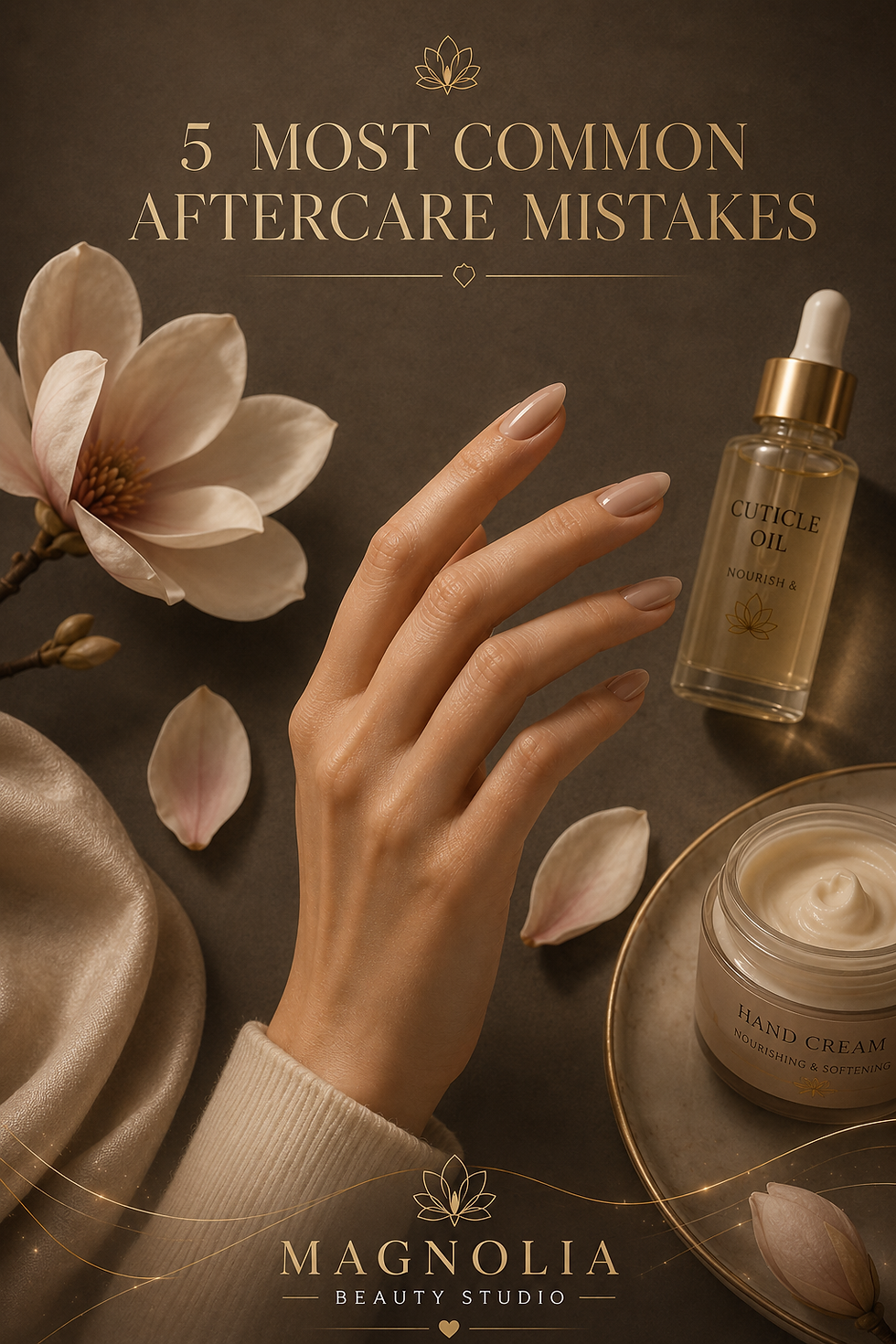
Avoid these habits to keep your manicure beautiful for longer.
1. USING NAILS AS TOOLS
Avoid using your nails to open cans, scratch stickers, pry things open or do any heavy lifting.
Your nails are not tools!
2. PICKING OR PEELING OFF GEL POLISH / BIAB / GEL OVERLAY
Peeling or picking off your polish can remove layers of your natural nail, causing weakness and damage.
3. BITING NAILS OR CUTICLES
This can lead to painful injuries, infections and damage to the nail bed.
Keep your nails and cuticles healthy!
4. CLEANING WITHOUT GLOVES
Detergents and harsh chemicals can weaken your nails and dry out your skin.
Always wear gloves while cleaning!
5. SKIPPING CUTICLE OIL
Cuticle oil keeps your nails and skin hydrated, flexible and strong. It helps prevent lifting, breakage and dry cuticles.
Oil is your best friend! ♡
A LITTLE CARE MAKES A BIG DIFFERENCE.
Your nails will thank you! ♡
Why Can a Nail Lift or Come Off?

Nail Biting, Picking or Peeling
Biting the nails, picking at lifted areas or peeling the product away breaks the bond between the product and the natural nail.
It may also remove thin layers of the natural nail plate, leaving it weaker and making future applications less durable.
Filing Nails at Home
Filing the sides, changing the shape, shortening the nails incorrectly, filing underneath the free edge or attempting to repair lifting at home can disturb the structure created by the nail technician.
It may also create small openings where moisture and dirt can collect, causing further lifting or damage.
Aftercare Matters
A nail technician can create a strong, safe and properly balanced structure, but the way the nails are treated between appointments is equally important.
Nails are not tools. Avoid picking, biting, excessive pressure and home repairs.
A long-lasting manicure is a form of teamwork: professional application in the salon and proper care at home.
Lifting or product loss can happen for many different reasons. Sometimes the cause may be connected with incorrect preparation, unsuitable product choice or application technique. However, the condition of the natural nail, daily habits and the way the nails are treated between appointments can also affect how well the product lasts.
Trauma
A strong impact, such as trapping the nail, hitting it against a hard surface or bending it backwards, can cause the product to lift or crack.
Repeated pressure can also weaken the structure over time. This includes using nails as tools, opening cans, scratching labels, pressing hard buttons with the nail tip or wearing nails that are too long for your lifestyle.
Changes in the Natural Nail
The natural nail plate can change over time. It may become weaker, more flexible, drier or more brittle, which can affect how well the product adheres.
These changes may sometimes be influenced by hormones, pregnancy, certain health conditions, medication, stress or changes in lifestyle. Every person reacts differently, so a product that lasted perfectly before may occasionally behave differently.
Why Is Aftercare So Important?
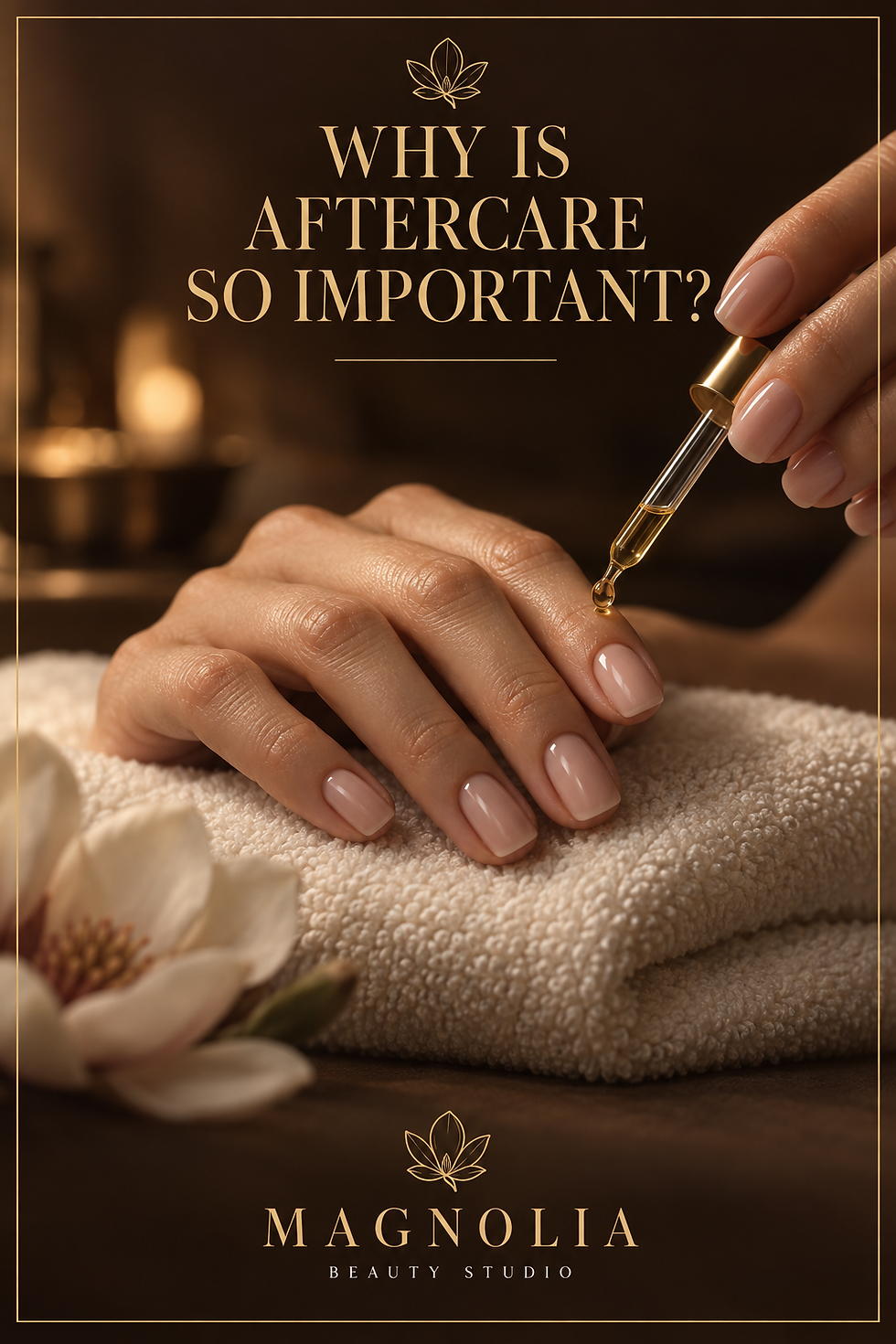
Gel polish, BIAB and nail extensions are designed to be durable, but no nail treatment is completely indestructible.
Your manicure is worn on natural nails that continue to grow and are exposed to water, pressure, impact and everyday activities. How the nails are treated between appointments can therefore affect their appearance, condition and durability.
Everyday Habits Matter
Nails experience pressure throughout the day, often without us noticing.
Using them to open cans, scratch labels, pick at objects, press hard buttons or lift things can place unnecessary strain on both the product and the natural nail underneath.
A single impact may cause visible damage immediately, while repeated smaller pressures can gradually contribute to chipping, cracking, lifting or breakage.
The free edge is particularly exposed because it frequently comes into contact with objects during everyday tasks.
Water and Cleaning Products
The natural nail plate contains keratin and can absorb water. Its flexibility and physical properties may temporarily change when it remains wet for a prolonged period.
Regular hand washing is completely normal and unavoidable. However, lengthy or repeated exposure to water, detergents and household cleaning products may affect the condition of the natural nails, surrounding skin and manicure.
Wearing gloves while cleaning, washing dishes or using strong household products helps protect both your hands and your nails.
Cuticle and Skin Care
Frequent hand washing, alcohol-based sanitiser, cleaning products and cold weather can leave the skin around the nails dry or uncomfortable.
Cuticle oil does not guarantee that a manicure will never lift, but regular use helps keep the surrounding skin soft, comfortable and well cared for.
It may also reduce the temptation to pick at dry skin or pull at loose areas around the nails.
Maintenance Is Important
As the natural nails grow, the structure created during the appointment gradually moves further away from its original position.
An overgrown manicure may become easier to catch or place under pressure, particularly when the nails are longer. Attending maintenance appointments at the recommended time allows your nail technician to rebalance the structure, check the condition of the nails and correct any small problems before they become more significant.
How Can You Care for Your Nails at Home?
To help protect your manicure:
-
avoid using your nails as tools,
-
wear gloves for cleaning and prolonged contact with water,
-
apply cuticle oil regularly,
-
do not pick, peel or repair lifted product at home,
-
be mindful of repeated pressure and accidental impact,
-
and attend your maintenance appointments at the recommended time.
Even with excellent aftercare, occasional damage can still happen. Nails are used constantly, and not every chip, crack or lifted area means that either the client or the nail technician has done something wrong.
A beautiful manicure does not end when you leave the salon.
Professional application and sensible home care work together to help keep your nails looking their best between appointments.
Why Doesn't My Nail Technician Remove Every Bit of Cuticle?
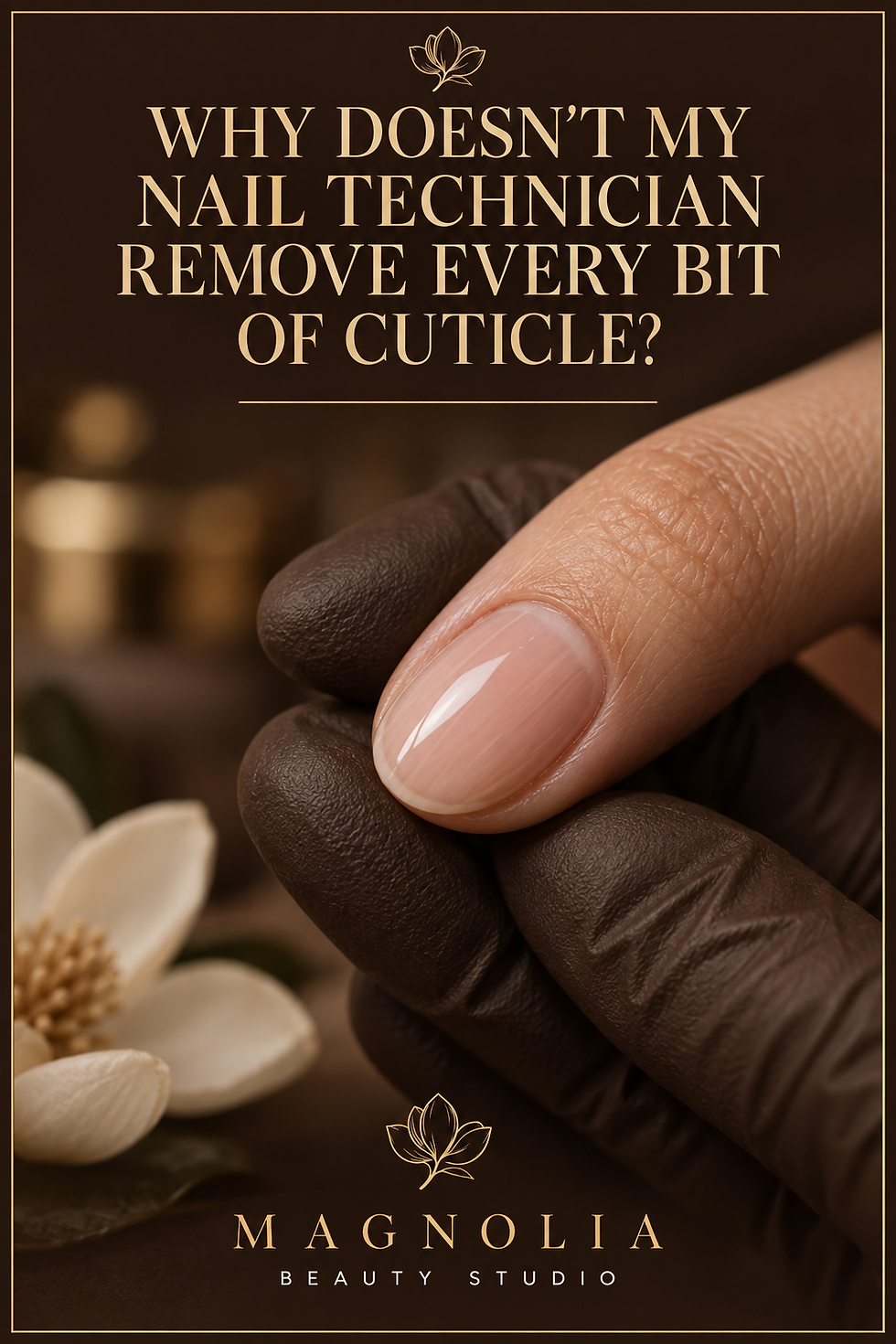
Many clients believe that the perfect manicure means removing every tiny piece of cuticle around the nail.
In reality, that's neither necessary nor always safe.
A professional nail technician aims to remove only the dead, loose skin that can be safely removed while leaving healthy, living tissue untouched.
Why Isn't Everything Removed?
The skin around your nails has an important job.
It acts as a natural barrier, helping to protect the nail unit from bacteria, fungi and other microorganisms.
Removing too much healthy skin may leave this protective barrier damaged.
What Can Happen If Too Much Is Removed?
Overly aggressive cuticle work can lead to:
-
cuts and bleeding,
-
pain and tenderness,
-
inflammation,
-
bacterial or fungal infections,
-
slower healing,
-
excessive skin regrowth,
-
and, in some cases, damage to the nail matrix, where the natural nail is formed.
Healthy cuticles should never be removed simply for cosmetic reasons.
Every Client Is Different
Some clients naturally have very little cuticle.
Others have thicker or drier skin that requires more preparation.
This is why every manicure is customised to the individual client rather than following exactly the same routine every time.
Less Can Sometimes Be More
If your nail technician leaves a tiny amount of skin around the nail, it doesn't necessarily mean the manicure wasn't finished properly.
In many cases, it means they chose the safest approach for your nails.
Professional nail care isn't about removing as much skin as possible.
It's about knowing what should be removed... and, just as importantly, what should be left alone.
The healthiest manicure isn't always the one where every trace of skin has disappeared.
It's the one that keeps both your nails and the surrounding skin healthy, protected and looking beautiful in the long term.