

Nail Art & Services
Why Did My Nail Technician Refuse to Do My Nails?
It can be disappointing to arrive for your appointment and find out that your treatment cannot safely be carried out that day.
Before beginning any service, a professional nail technician should check the condition of your natural nails and the surrounding skin. If something appears damaged, inflamed or potentially unsafe, they may need to postpone or refuse the treatment.
This decision is not made to upset, embarrass or inconvenience you. It is made to protect your health and natural nails.
Why Might a Treatment Be Refused?
A nail technician may be unable to perform a treatment if they notice:
-
signs of a possible nail or skin infection,
-
unexplained green, brown or other unusual discolouration,
-
severe onycholysis, where the natural nail has lifted from the nail bed,
-
bleeding or damaged cuticles,
-
cuts, sores or open wounds around the nail,
-
a severely over-filed or damaged natural nail plate,
-
an injured hyponychium,
-
significant redness, swelling or inflammation,
-
signs of recent trauma,
-
or another condition that could make the service unsafe.
A nail technician does not diagnose medical conditions. However, they are professionally responsible for recognising when a treatment should not continue and when a client may need advice from a GP or another appropriate healthcare professional.
Sometimes nail damage occurs after products have been picked, peeled or removed incorrectly at home. It may also result from an accidental injury, repeated pressure or simply because the natural nails need time to recover.
“Can You Just Do Them This Once?”
One of the most difficult parts of being a nail technician is having to say “No” when a client has an important occasion approaching.
You may have a wedding, birthday, holiday or graduation coming up — or even jokingly say, “But I’m flying to space tomorrow!”
As much as your nail technician may want to help, a responsible professional cannot ignore something that may become worse after nail products are applied.
You may even say:
“I understand the risk and I take full responsibility.”
Unfortunately, responsibility for performing a safe service cannot simply be transferred to the client. A nail technician must still follow professional safety standards and use their own judgement.
Your Safety Comes First
Refusing a treatment does not mean that your nail technician does not value you as a client. In fact, it often means giving up the income from that appointment.
However, no manicure is more important than your health.
Protecting the natural nail, avoiding further damage and maintaining safe professional standards must always come before completing a treatment or filling an appointment space.
The Good News
Being refused treatment does not usually mean that you will never be able to have your nails done again.
Your nail technician can explain what they have noticed and may advise you to allow the area to heal or to consult your GP or another appropriate healthcare professional before returning.
Once the problem has been properly assessed or the nails and surrounding skin have recovered, you may be able to safely enjoy your manicure again.
A professional nail technician does not say “no” because they do not want to help.
They say “not today” because your health and safety will always come first.

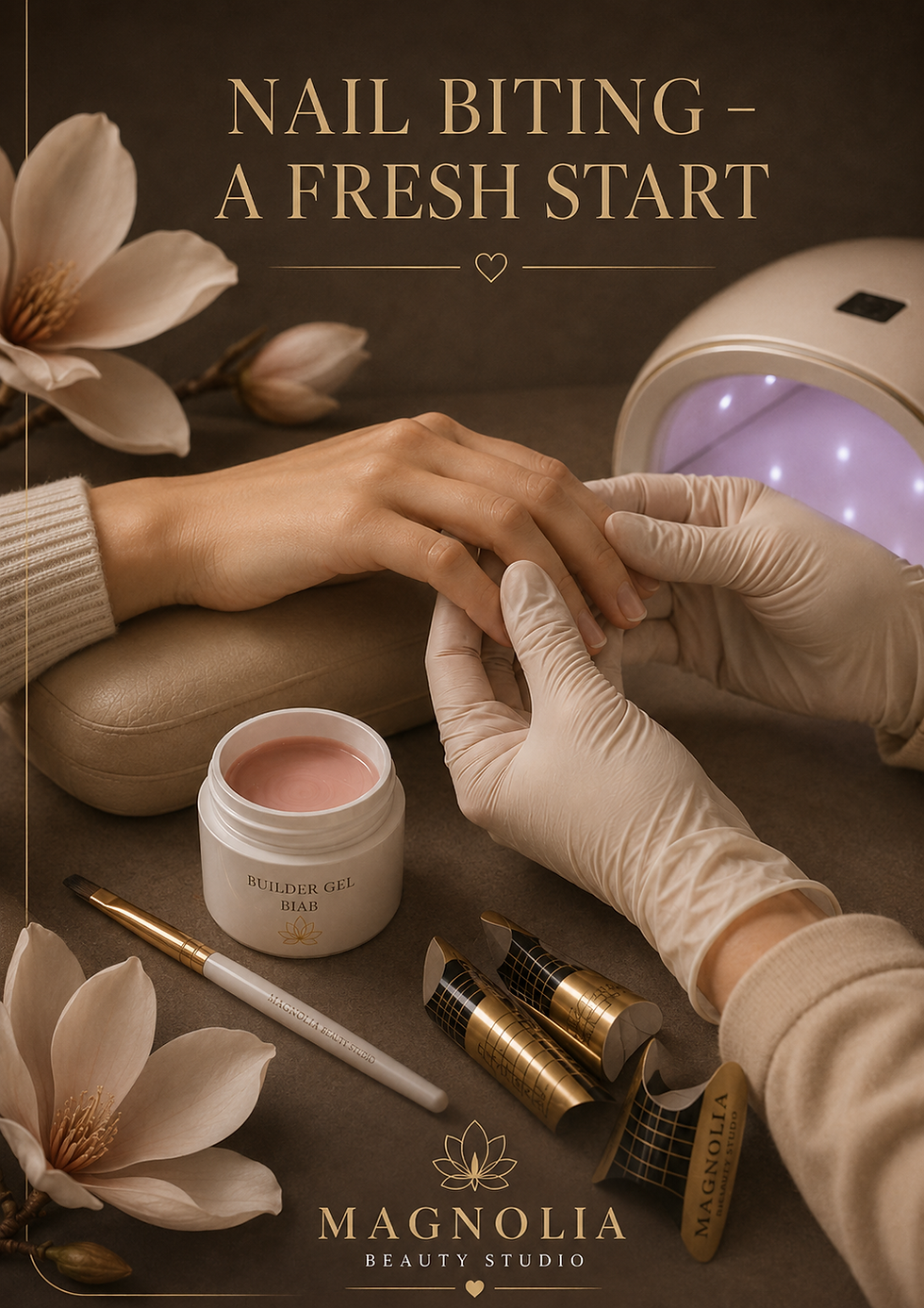
Nail Biting – A Fresh Start
Many people feel embarrassed about bitten nails.
Please don't.
For a nail technician, bitten nails aren't something to judge—they're an opportunity to help someone regain confidence in their hands.
Personally, I see bitten nails as a challenge, and I genuinely enjoy helping clients transform them step by step.
Why Can't Bitten Nails Be Made Very Long Straight Away?
When natural nails have been bitten very short, they provide very little support for long extensions.
Creating long nails immediately may look attractive at first, but it places excessive stress on the natural nail and increases the risk of lifting, breakage and injury.
For this reason, a professional nail technician will usually recommend extending the nails only to the fingertip—or just slightly beyond it—during the first appointment.
This creates a much stronger and safer foundation while allowing the natural nails to recover and grow underneath.
Why Is the First Refill Usually Sooner?
After the first appointment, your nail technician may recommend returning after around two weeks instead of waiting three or four.
This isn't because something has gone wrong.
It's because, as your natural nails begin to grow, the structure of the enhancement also changes.
At the first refill, your nail technician can:
-
rebuild the apex,
-
rebalance the structure,
-
strengthen the nails,
-
make any necessary adjustments,
-
and, if appropriate, gradually increase the length.
This gradual approach produces stronger, healthier and longer-lasting results than trying to achieve everything in a single appointment.
Trust the Process
Recovering from nail biting is a journey rather than a one-day transformation.
With regular maintenance, the right structure and a little patience, even severely bitten nails can become strong, healthy and beautiful.
The goal isn't simply to create long nails.
The goal is to create nails that are beautiful, durable and safe for you to wear.
Why Do Professional Nail Treatments Cost What They Do?
It is a question many people understandably wonder about:
“Why do professional nail treatments cost this much?”
From the outside, the service may seem quite simple. You sit down, have your nails done and pay for the appointment.
What is less visible is everything required to provide that service safely, professionally and consistently.
The Appointment Price Is Not the Technician’s Income
The amount paid for a nail treatment does not go directly into the nail technician’s pocket.
Part of every appointment fee must cover the products used during the service, the cost of running the salon, taxes, insurance, equipment, hygiene procedures and many other business expenses.
Only after these costs have been paid does the remaining amount contribute towards the technician’s actual income.
You Are Paying for More Than the Time at the Nail Desk
The time you spend sitting at the nail desk is only one part of the service.
A professional nail technician invests in:
-
professional training and continuous education,
-
high-quality products,
-
specialist tools and equipment,
-
cleaning, disinfection and hygiene supplies,
-
disposable files, buffers and other single-use items where appropriate,
-
gloves, masks and cleaning products,
-
suitable furniture and professional lighting,
-
booking and payment systems,
-
business insurance,
-
rent,
-
electricity and heating,
-
business rates and taxes,
-
accounting,
-
software subscriptions,
-
and many other day-to-day running costs.

These are not optional extras. They are all part of providing a safe, reliable and professional service.
The Work Does Not End When the Appointment Ends
The appointment itself is only part of a nail technician’s working day.
Before, between and after clients, time is also spent:
-
preparing and cleaning the workstation,
-
disinfecting tools and equipment,
-
replacing disposable items,
-
ordering and organising products,
-
replying to messages,
-
managing bookings,
-
completing business administration,
-
attending training,
-
practising new techniques,
-
creating salon content,
-
and keeping up with changes in products, techniques and professional standards.
Much of this work is completed before the first client arrives or after the final appointment has ended.
Experience Has Value
You are not paying only for the products used or the number of minutes spent in the salon.
You are also paying for the knowledge, precision and experience behind the service.
A professional nail technician may spend hundreds or thousands of hours learning, practising and improving their skills. This experience allows them to assess different nail types, select suitable products, build a safe structure, solve unexpected problems and create consistent results.
The faster and more confidently an experienced technician works, the less visible those years of practice may appear — but their value is still present in every appointment.
Why Is There an Extra Charge for Nail Art?
One of the questions clients sometimes ask is:
"Why does a French manicure, ombré or nail art cost extra?"
The answer is simple.
You're not paying for a line, a few crystals or a little bit of glitter.
You're paying for the additional time, precision, experience and creativity needed to create that design.
Nail Art Takes More Than Time
A classic colour application is usually much quicker than creating detailed designs.
A French manicure requires perfectly balanced smile lines.
Ombré requires seamless colour blending.
Hand-painted designs often involve multiple steps, different brushes, several curing stages and an exceptional level of precision.
Even designs that look simple can add a significant amount of time to an appointment.
It's About Skill, Not Just Time
One of the biggest misconceptions is that you're paying for the few minutes it takes to paint the design.
In reality, you're paying for the years it took to learn how to create it.
Behind every clean French line, perfectly blended ombré or detailed piece of nail art are:
-
professional training courses,
-
ongoing education,
-
hundreds of hours of practice,
-
years of experience,
-
specialist brushes and tools,
-
high-quality professional products,
-
and the knowledge of which techniques will work best for your individual nails.
Many of the simplest-looking designs are actually some of the most technically demanding.
A flawless French manicure, for example, often requires far more precision and control than applying a full colour.
Every Design Is Handcrafted
Unlike factory-made products, every nail design is created entirely by hand.
Your nail technician carefully plans the design, selects the appropriate products, brushes and techniques, and adapts everything to your nail shape, length and the look you want to achieve.
No two sets are ever completely identical.
That is what makes nail art unique.
Experience Makes the Difference
Beautiful nail art isn't created by chance.
It's the result of continuous learning, attending advanced training courses, practising new techniques and refining skills over many years.
Every brushstroke reflects not only the time spent creating your manicure, but also the experience and dedication behind it.
When you choose nail art, you're investing in craftsmanship—not just decoration.
A Thought to Leave You With...
Just because something takes five minutes to create doesn't mean it took five minutes to learn.
Behind those few minutes are years of practice, education, passion and experience—all coming together to create something beautiful, personal and made especially for you.
